


10 reasons your dog doesn’t come back when you call (and what to do about it)
If your dog looks right at you when you call (even worse, doesn’t even look at you!) and then trots off in the opposite direction, you’re in good company. Recall is one of the most common challenges dog owners bring to us here at HotDog Training
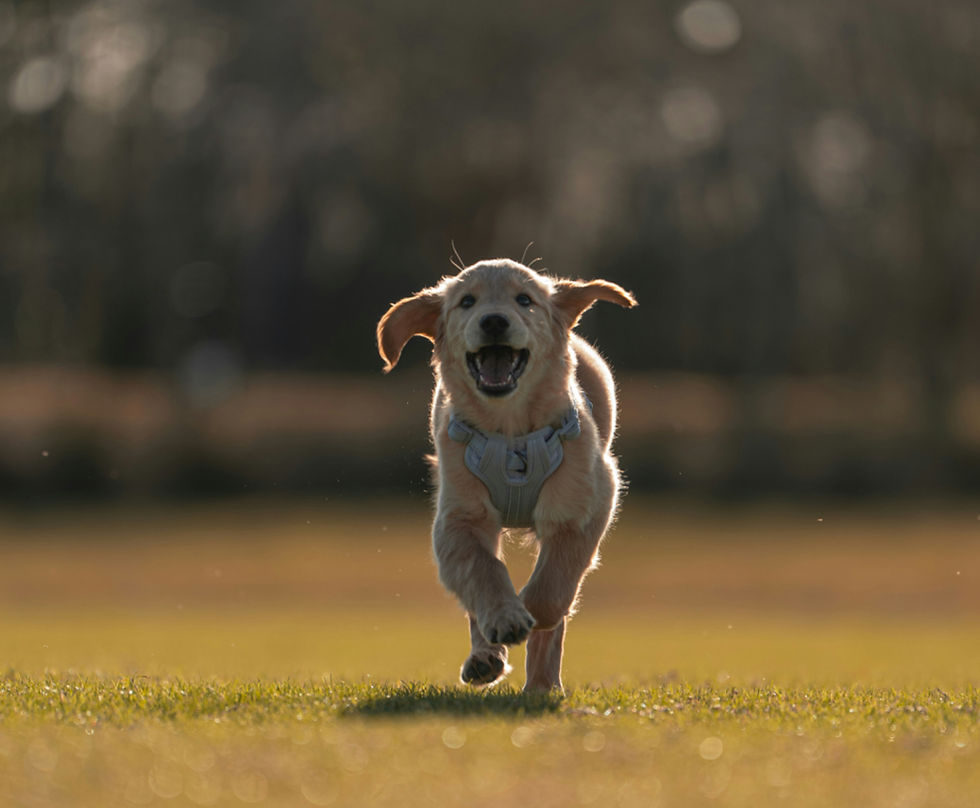
Here in the Chilterns recall can be a particular challenge because the countryside is a favourite place for dogs to go AWOL. But your dog CAN get a better recall. It’s just a matter of understanding why it’s not working yet, and teaching it in the right way.
Here are the top 10 reasons recall may not be working yet and exactly what you can do about each one. If you think some expert guidance would be helpful, our approach is friendly, positive and tailored to you and your dog, whether that’s in our group classes or in 1-2-1 sessions.
Let’s get into it
1. The environment offers better rewards than you do
The chance to run around after smells, squirrels and other dogs is hugely motivating for many dogs. The reality is it’s unlikely you have any reward to offer that’s more exciting than chasing a rabbit. But training isn’t about bribing with something better . It’s about practising in a controlled way, layering in distractions until your dog realises that ignoring what the world has to offer is in their best interest. It’s about building a habit and a recall response that’s so strong, it’s a reflex reaction. Meaning your dog will turn and run to you before they’ve had a chance to weigh up which option they prefer.
How we help:
In group classes like Shape ’Em Up and Super Dog, we build recall around distractions gradually so that your dog learns to value coming back even when there’s plenty going on. In 1-2-1 sessions we find out what really motivates your dog, get them super excited about recall in a carefully controlled environment, and then ramp up the distractions.
2. Your dog doesn't understand recall properly
Recall isn’t something dogs just know; it needs clear understanding. Very often I see clients who are using their dog’s name to recall them. What’s the problem? Well, day to day that name can mean anything from ‘good morning’ to ‘who’s a good boy’ to ‘don’t you dare!’. If you want great recall, you need to associate one clear cue, eg ‘come’ or ‘here’, with the action of coming back to you. And that’s the other problem. Often clients haven’t made it clear to their dog that ‘here’ means ‘get right to my feet and stay there’.
How we help:
We start with the basics – making sure your dog understands exactly what your cue means. Then we associate that cue with great stuff, before progressing to knowing when to mark (at the moment the dog gets to your feet) and where and how to reward (usually at your feet, but we also use games where we throw the treat to increase its value). The great thing about 1-2-1 recall sessions, is that we can tailor recall games to your dog’s personality and environment.
3. You only call your dog when the fun ends
If ‘come’ always means the lead goes on and the walk is over, your dog learns to avoid it. In training terms, your cue becomes 'poisoned', ie it's associated with bad stuff, not good stuff. You need to use your cue when you don’t need it and practise in the right way (which often means games, not endlessly calling your dog back on a walk). Recalls that equal good stuff need to massively outweigh recalls that equal ‘bad’ stuff (in your dog’s mind).
How we help:
Classes and 1-2-1 sessions will show you how to make recall a rewarding and fun experience by mixing it with play, tasty treats and positive reinforcement, so your dog learns that coming back means good things happen. I’ve written another blog about rewards here that will introduce you to effective rewarding.
4. Your recall cue has been overused
Repeating “come” when your dog isn’t listening turns your cue into white noise in the background. You and your dog need to understand the concept of ‘there’s one chance to earn the good stuff’.
How we help:
In both group classes and 1-2-1 training, we teach clear signalling and timing so your cue stays powerful and effective.
5. Your dog has learned that ignoring you works
Your dog has discovered that recall is optional. They come back eventually, but in their own time. This often happens when young dogs have been given inappropriate freedom. By that I mean that they’ve been given off lead time in the wrong setting before their recall training was ready. We’re big fans of using a long line (a 5-10m lead NOT one of those flexi leads). This doesn’t mean your dog never gets to run off lead, but it’s important to have your dog under control at those times or places where they’re likely to go deaf to you. Using a long line gives you a chance to practise and build your confidence in your dog’s recall. It means your dog learns that the best stuff happens when they’re near you.
How we help:
We use careful progression and teach you how to judge when and where it’s appropriate for your dog to be off lead, so your dog experiences success rather than rehearsing ignoring you.
6. You’ve accidentally punished your dog for coming back
Look, we all understand how incredibly frustrating it can be when your dog runs off. And the urge to tell them off when they finally reappear is only human. BUT it’s important to realise that your dog associates the telling off with the returning to you, NOT the fact it’s taken 15 minutes to do it. Even that consistent, ‘come back and your lead goes on’, in training terms, ‘punishes’ the recall.
How we help:
We’ll help you work out if you’ve inadvertently been punishing recall and put the power back into your recall cue. We'll show you how you can reward effectively and when to withhold rewards to motivate a faster than ever recall..
7. Your dog is anxious or overwhelmed
I see this quite a lot. Some dogs find busy parks or noises overwhelming, which makes listening hard. They’re not being ‘naughty’, it’s just they are programmed to prioritise survival and if they feel threatened or overwhelmed, some dogs will switch off from you.
How we help:
Understanding the reason your dog isn’t coming back to you is one of the benefits of a 1-2-1 training recall session. It’s great for dogs who need slower, one-on-one support. We’ll help your dog build confidence, emotional regulation and focus before testing recall in high-distraction areas.
8. Your dog is an adolescent
Understanding what happens in the canine brain during adolescence is so important. There’s a developmental stage where a dog is programmed to give much higher priority to the outside world than their caregiver. It’s a reason that your dog’s once-great recall can fall apart during the teenage period and also a reason to up the training in the right way.
How we help:
In both classes and private training, we reassess and refresh recall basics, and give you management strategies to keep your dog safe while training progresses. Our Shape ‘Em Up Improvers class is tailored to teenage dogs, so do take a look at that.
9. Your rewards aren’t motivating enough
If the world offers better rewards than you do, your dog will choose the world every time. And yet we so often see owners turning up with a pocketful of kibble. Switch that out for chicken, cheese, warm sausage and now see how motivated your dog is. Or tap into their play drive with super exciting game rewards. Now let’s be realistic. For many dogs, particularly working, hunting and guardian breeds, they’re wired to find the outside world super motivating and there's no reward in the world more exciting than what's out there. The good news is, you don't have to produce a live squirrel from your pocket to motivate your dog, It’s a question not only of working with really high value rewards but of knowing exactly how, when and where to use them, how, when and where NOT to use them, and how using them scientifically becomes more motivating even than rewarding every single time. As you can probably tell, rewarding is something I could talk about for a long time!
How we help:
We help you identify what really motivates your dog - whether that’s high-value food, play, toys or praise - and show you how to use it effectively in recall training. Learn the basics of rewarding here
10. Your dog hasn’t generalised recall
‘Fido knows what ‘here’ means. He can do it in the garden’ We hear this a lot! Coming back in the garden doesn’t automatically transfer to the woods, fields or park. It can be a matter of higher distraction, as I’ve talked about, but you need to take ALL training into a variety of settings. Don’t just assume that because your dog knows ‘sit’ in the house, they understand ‘sit’ in the middle of a field. It’s exactly the same for recall. It might seem obvious to us, but context is hugely important for dogs. 'Come' in the kitchen does not feel at all the same as 'come' in the middle of the woods.
How we help:
Working in a class can be really helpful for dogs who haven’t learned that ‘come ‘ or ‘here’ means ‘get to my feet as fast as you can’ regardless of when or where they hear it. And our 1-2-1 recall sessions can fast track the process so your dog learns recall applies everywhere.
Group Classes vs 1-2-1 Sessions
Which is right for you?
At HotDog Training, we offer fun, supportive group classes and tailored one-to-one training to suit every dog and owner:
🦴 Group Classes
Puppy Foundations & Shape ’Em Up Improvers
Improve responsiveness and confidence around other dogs
Build recall in a fun, encouraging setting
🐾 1-2-1 Training
Personalised recall coaching
Solutions for anxiety, reactivity or inconsistent listening
Tailored plans that fit your lifestyle and goals
Training at our venue or in your local area
Many owners start with 1-2-1 training and then move into classes for extra practice and confidence. Recall sessions are £85. Get in touch and book one in at our outdoor training ground info@hotdogtraining.co.uk
Ready to Enjoy Walks Where Your Dog Comes Back Every Time?
Reliable recall changes the way you live with your dog — it brings freedom, confidence and peace of mind.
📍 HotDog Training – serving Little Kingshill, Great Missenden, High Wycombe, Amersham, Beaconsfield, Chalfonts and the surrounding Buckinghamshire & South Bucks area.
👉 Book your class or 1-2-1 session today — spaces are limited to keep our training personal and effective.👉 Get in touch: info@hotdogtraining.co.uk or call Sue on 07902 793979 / Carol on 07557 262424.
Let’s turn “Come here!” into your dog’s favourite word. 🐶💛


Comments